A retreat that tells you "you feel better now" is not the same as a retreat that shows you. BAGHI is partnering with Whoop and Google's fitness band so the four programs are measured at arrival, tracked across the stay, and read back to the guest on the last morning as a clear, personal report. Not a gimmick — the connective tissue between what we ask the guest to do and what the body actually does in response.
We are in working conversation with Whoop and with the Google fitness band team to integrate their wearables into the four BAGHI programs at the protocol level — not as a sponsored extra, but as a clinical input to the wellness lead's daily schedule. The intent is straightforward: arrive with a number, leave with a better one.
How the integration works. The guest arrives wearing either device, or is fitted with one on arrival as part of the program. On day-1 the wellness lead reads a clean baseline — resting heart rate, heart-rate variability, sleep stage distribution, respiratory rate, recovery score, skin temperature. That baseline informs the schedule: a guest with a depressed HRV does not get a fitness-heavy first day; a guest with broken deep sleep gets the herbal bath earlier in the evening; a guest with elevated cortisol markers spends the first morning on the platform, not in a treatment room.
"A schedule written for the body in the chair — not the body the brochure imagined."
What we are reading. The four pillars BAGHI is built on map almost one-to-one onto what these wearables already track well:
1 · Sleep. Stage distribution, sleep latency, mid-sleep wake, total sleep, respiratory rate during sleep. The slope's quiet, low light pollution, mountain air and walnut-smoke evening reliably push deep sleep up by night three. The wearable shows it.
2 · Activity. Slow yoga, breathwork, hiking, mountain biking, the cold ritual — each leaves a different signature. We dose them across the days. The wearable shows the body's response: faster strain recovery, broader HRV, lower resting heart rate by the end.
3 · Water. Hydration is the simplest, most measurable lever. Tracked through skin temperature, urine output via guest-reported markers, and the mineralised mountain water that's brought to every Lodge twice a day.
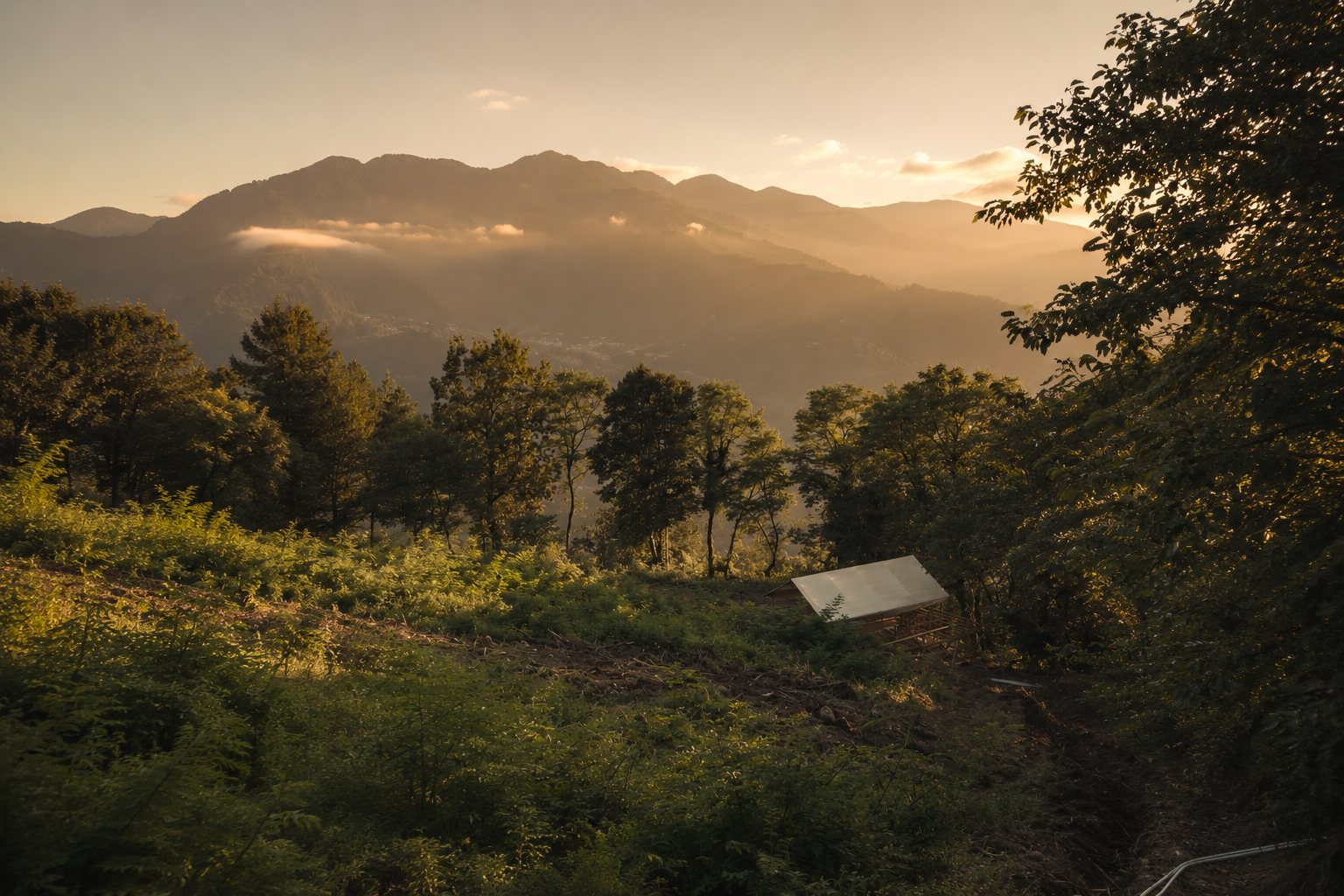
4 · Air. The Chorokhi gorge breathes cool clean air up the slope at dusk. Indoor air in the lodges is filtered and never recirculated. We track respiratory rate during sleep — the cleanest single proxy for the air a body has been breathing for eight hours.
The fast reset. Combine those four pillars, give the body forty-eight to a hundred and twenty hours, and the result is what the BAGHI literature calls the fast reset. The wearable makes it visible. In a typical 3-night stay we see: resting heart rate down 3–6 bpm, HRV up 12–20%, deep sleep up 15–30 minutes a night, recovery score above 80% by the last morning. In a 5-night stay the same numbers continue to climb — and the guest leaves with a printed report and a recommended four-week protocol to hold the gains at home.
What this is not. It is not a clinical trial. It is not a medical device. It is not a substitute for a physician. It is the same use of consumer wearables that high-performance teams and longevity clinics have built their practice around in the last five years — applied, finally, inside a retreat that is small enough to write a schedule for one body at a time.
Privacy. The guest owns their data. Nothing leaves the device unless the guest exports it. BAGHI keeps no biometric records after the stay. The end-of-stay report is printed, handed over, and the digital copy is deleted from the wellness lead's tablet at check-out.
This is the connective tissue between the older traditions of the slope — sound, water, walking, sleep — and the modern instruments that can finally tell the guest what the body of their grandmother already knew: that a few days in a quiet place, done correctly, changes the body in a way that lasts.
— Ilyan · with the wellness lead, after a long conversation about what we measure and why