Sustainability
How BAGHI is built to leave a light mark — natural materials, rainwater harvesting, reed-bed grey-water filtration, low-energy design, local supply. Quiet hospitality, with the slope kept intact.
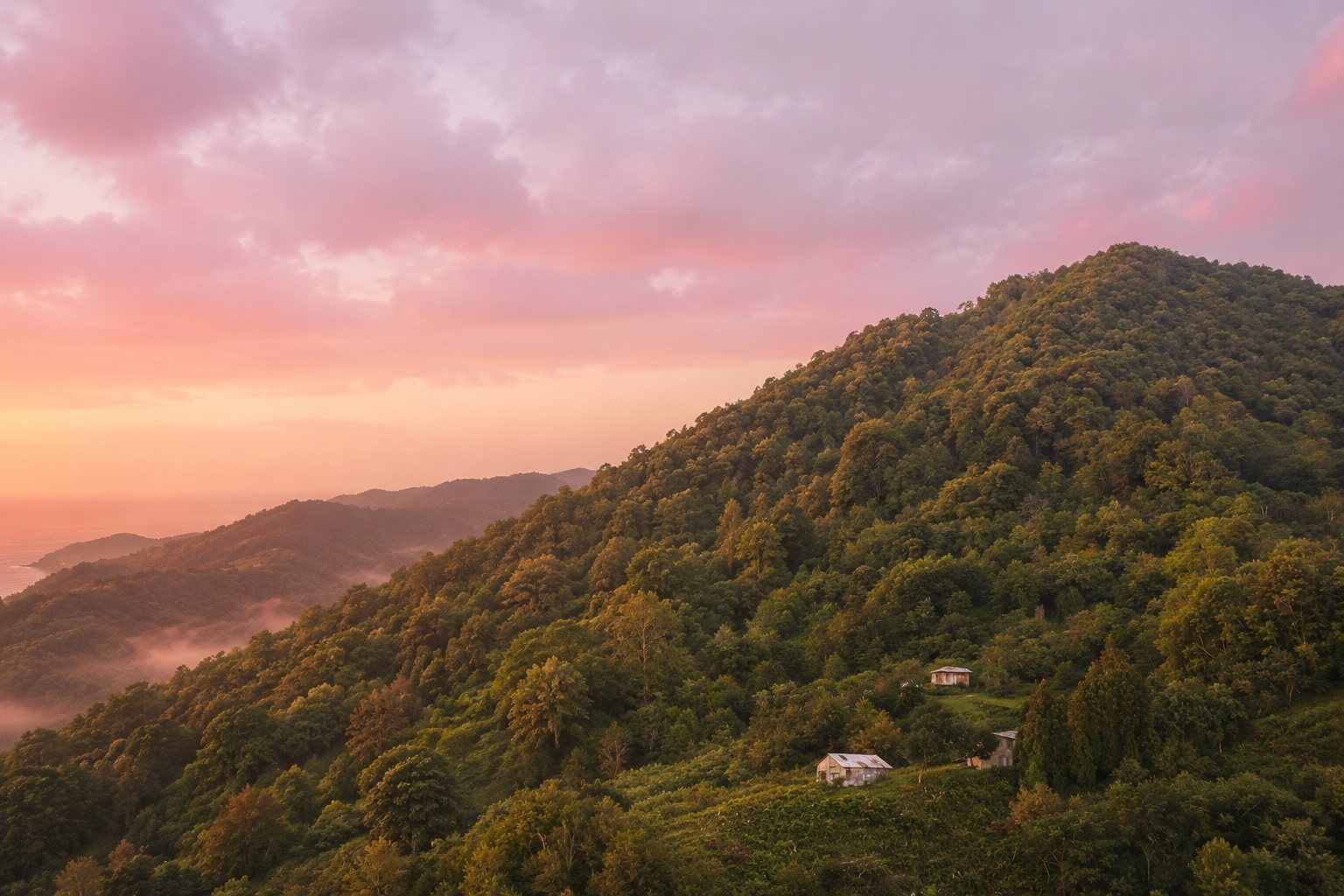
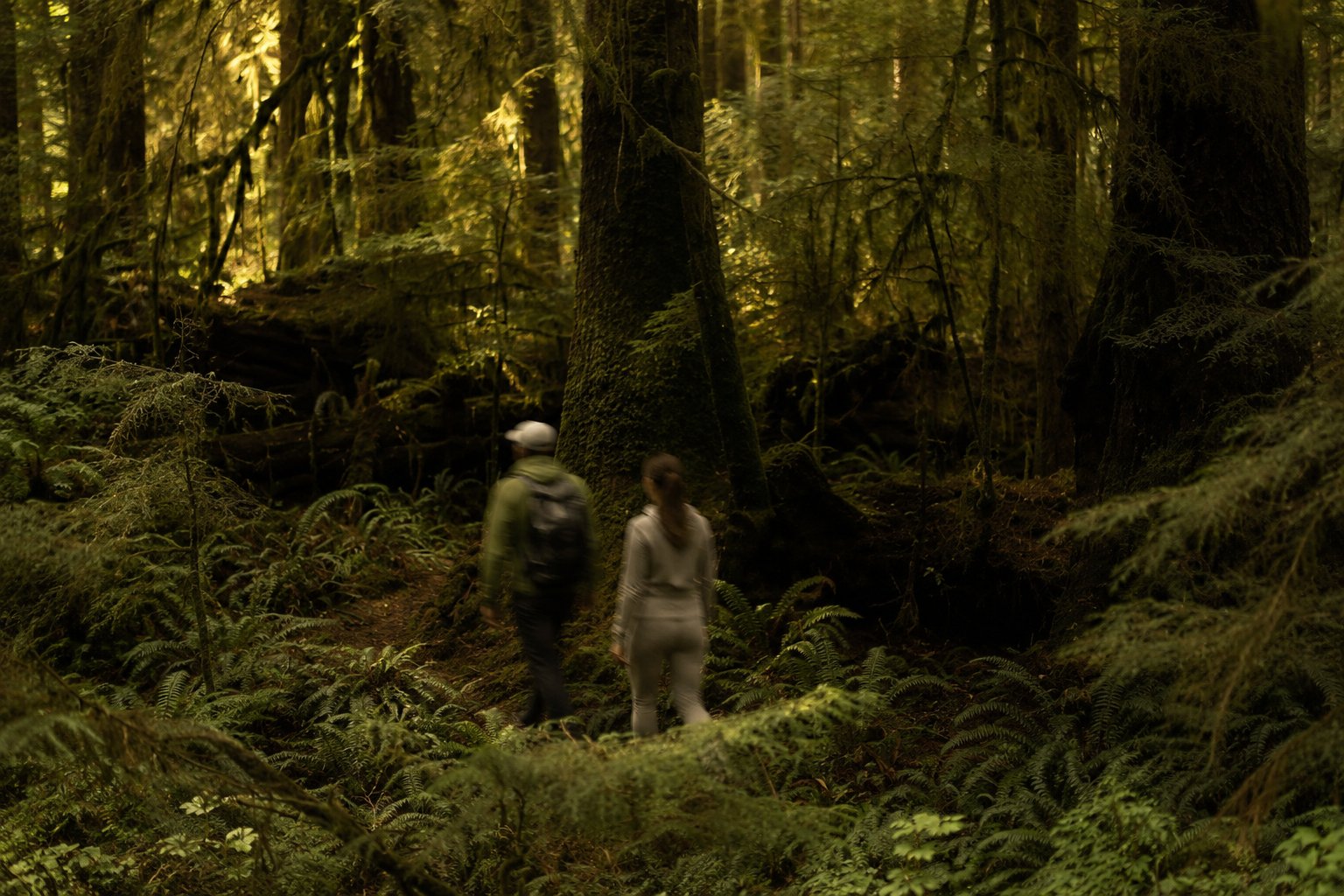
Across the world, hospitality often arrives in a place by overwhelming it. Roads are widened. Lights are added. Local life is staged. BAGHI begins from the opposite premise — that the slope, the forest and the village were already complete, and that the role of the retreat is to inhabit them gently, not to redraw them.
Sustainability at BAGHI is therefore not a set of certificates pinned to a wall. It is the daily texture of how the place is built and run: how food is sourced, how light is kept low, how heat is generated, how waste is held, how the village around the property continues to live its own life undisturbed.
Several principles run through every decision. They are written here not as marketing, but as commitments — for guests who care, and for the team that returns to them each season.
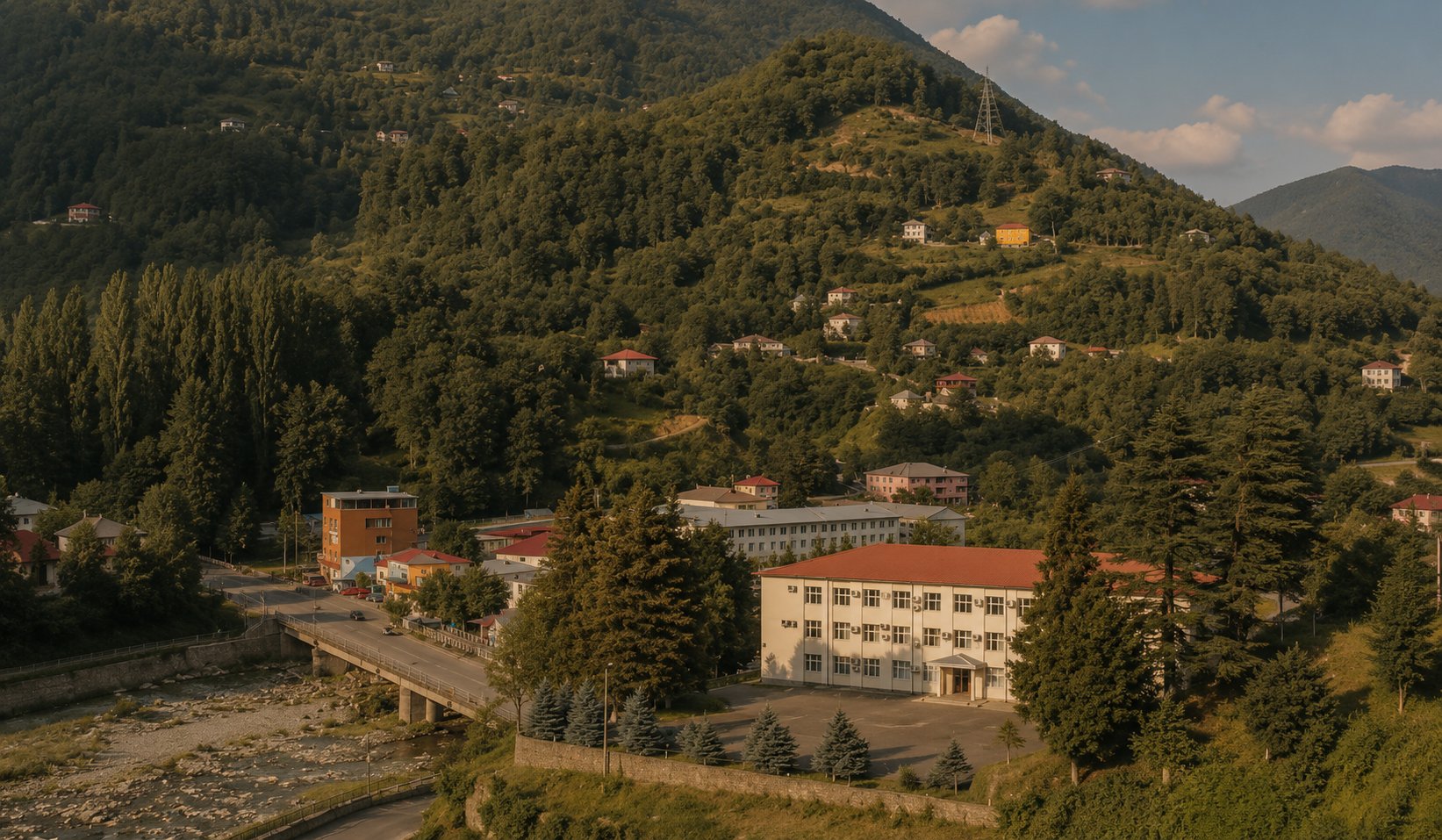
Within the village, not above it
BAGHI does not import what the village already grows. Bread, cheese, eggs, milk, honey, walnuts, seasonal fruit and herbs come from the families directly below the slope. The kitchen at Tqe restaurant adapts its menu to what is in season in Erge, not to what is shipped from elsewhere.
Most signature activities — hiking, mountain biking, quad-bike routes, walks to the waterfall — are led by guides who grew up in the valley. Their work is paid directly, week by week.
The retreat sees itself as a small new business inside an old village, not as a separate world above it. The economic life of Erge is part of how BAGHI succeeds.
Light, held low
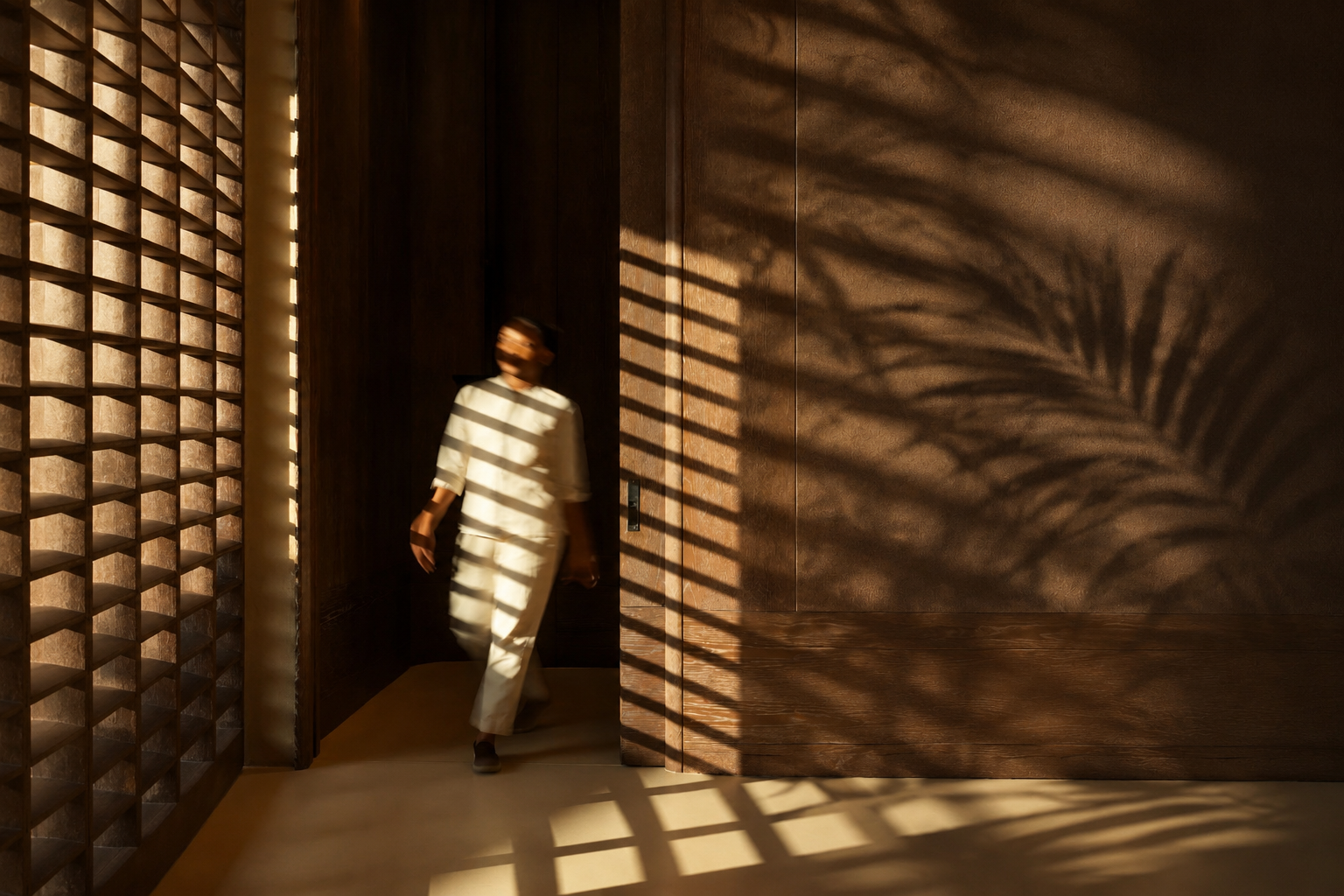
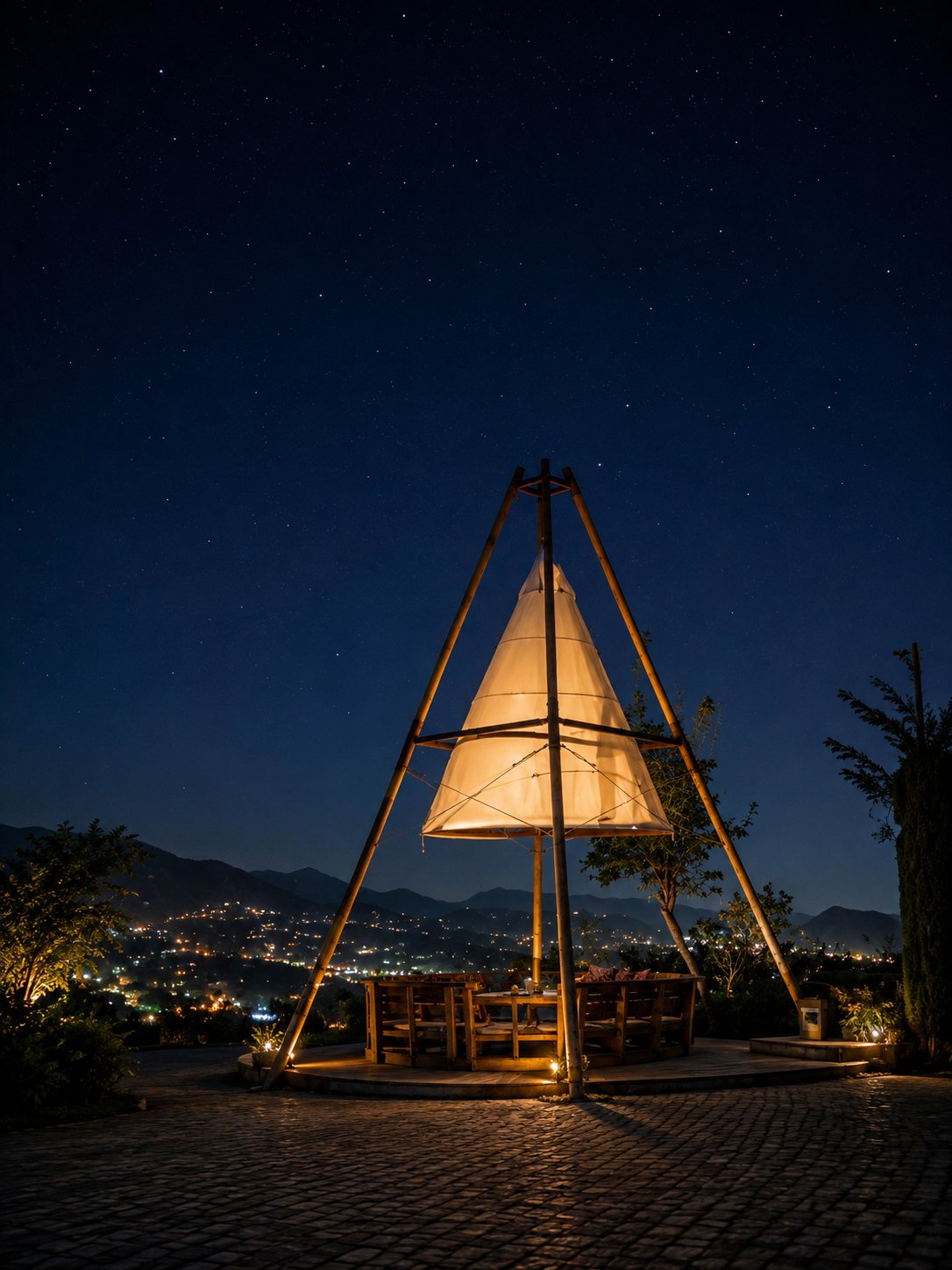
Mountain skies in Adjara are exceptional. To keep them so, BAGHI is designed with low-level, warm-toned lighting throughout — pathway lamps shielded downward, no spotlights on the canopy, no decorative floodlights. After sunset, the property remains intentionally dim. Stars over Erge are part of the experience, and they are protected.
Power is supplied partly by solar collectors installed on the upper terraces. The system is sized to cover daytime load and to supply hot water through the warm seasons. Heating draws on a combination of solar pre-heating and high-efficiency wood from local supply, in the colder months.
Where electrical load is unavoidable, equipment is chosen for the highest energy rating available in the region.
Waste, sorted at source
Waste at BAGHI is sorted at the point of generation, not afterwards. Each Lodge has separate receptacles for organics, paper, glass, metal and plastic. Organics return to the village composters used by the surrounding farms — the same farms that supply the kitchen. The circle is short, and visible.
Paper is not used as a routine surface — menus, schedules and reading material are kept in cloth and timber folios that remain in the Lodge. Where paper is used, it is uncoated and recycled.
No disposable tableware appears anywhere in service. Plates, glasses, cups, towels, bath linens — all of it is ceramic, glass, linen, cotton. Even on the forest meditation platforms, infusions are carried in glass thermoses, not paper cups.
Materials, drawn from the region
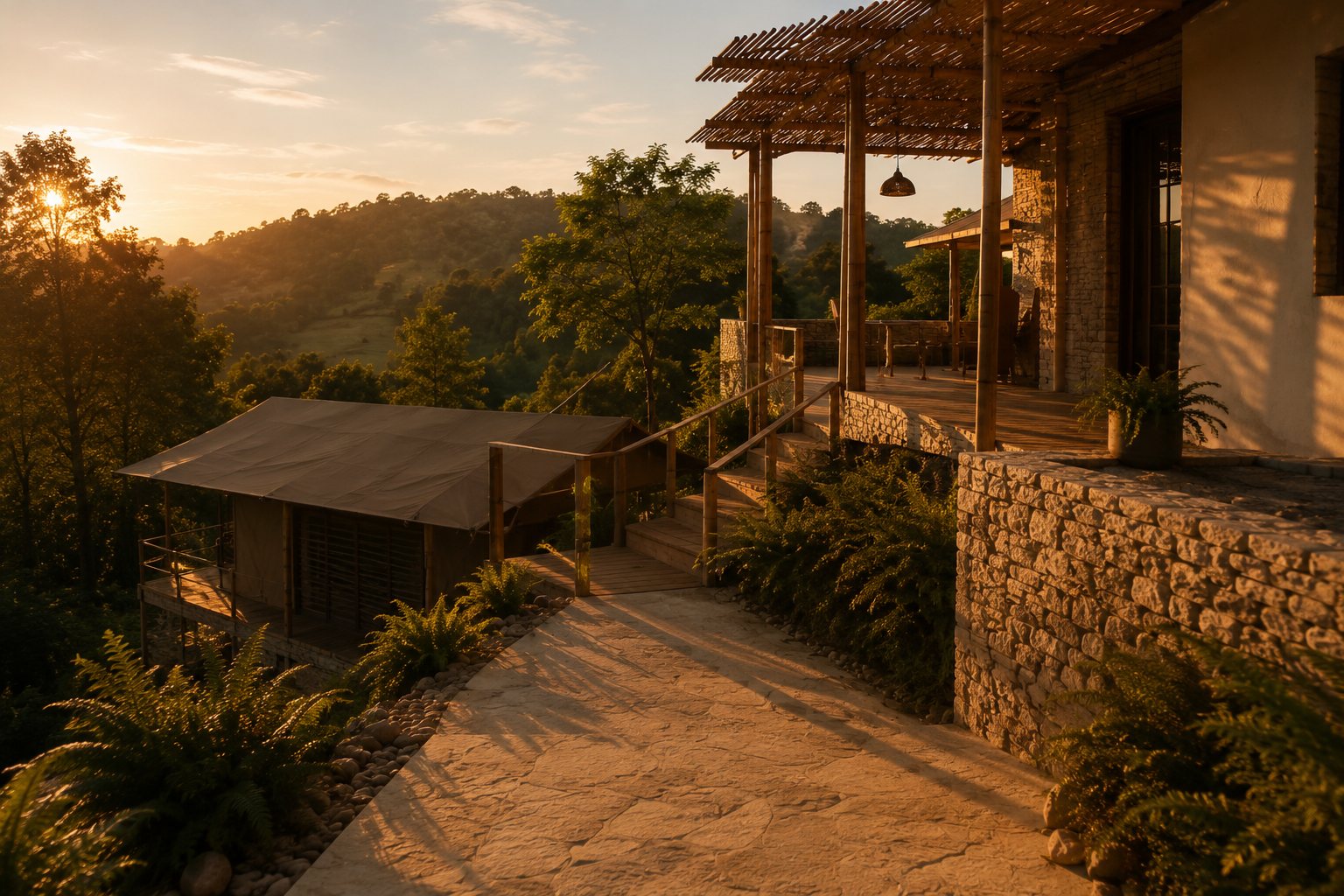
The architecture of BAGHI steps down the slope in three terraces, in the manner of old Georgian mountain villages. Construction draws on regional stone, regional timber, and modular timber buildings produced by the Wild House factory under the supervision of the Association of Glamping. Foundations are minimised. Trees on the slope were mapped before any clearing began, and the architecture was adjusted to preserve the older ones.
Interiors are built around linen, ceramic, wool, leather and untreated wood. Synthetic upholstery is avoided. Detergents are biodegradable and made in Georgia.
Water, air, silence
Water arrives clean from the mountain through the village supply, then is filtered locally for drinking. Wastewater is treated on-site before returning to the soil. Showers and herbal baths use thermostatic mixers that limit consumption without limiting the bath.
Air is left to do its work. The property does not run heavy air-conditioning load — Lodges are designed for cross-ventilation, with shutters that open to the forest and sea breeze. Cooling is offered when needed, kept gentle by default.
Silence, finally, is held as part of the architecture. No background music in public spaces. No engines on the slope itself. Service vehicles are kept at the entrance car park. The slope is left to the wind and the village.
A long path
BAGHI is being built without bank loans, without large outside investors, and without a deadline driven by anyone other than the place itself. The pace is therefore the pace of the slope — slow, careful, additive. New decisions are made each season, based on what the previous season made clear.
This is, in the end, the heart of how sustainability is held here. Not as a marketing position, but as the consequence of building quietly, in one valley, with the village in earshot.